Postingan

Menampilkan postingan dengan label agriculture

Azalea Care Guide - Azaleas Indoor Plants

Gambar
The evergreen azaleas bring a burst of color to the spring garden and are perfect for the humid southeastern US climate. You can find old Formosan or Indica types that have been left behind at old house sites and in graves just fine with little or no care. With cultivars ranging in size from 10-12' at maturity to tiny 1-2' like Gumpos and Chinsei (both are fine bonsai specimens) there are azaleas that do well in almost any garden. Colors can range from brilliant reds, pinks, whites, purples and even oranges as well as variegated shapes featuring stripes, spots, and picotees. For real yellows and golds, you should look at leaf types and rhododendrons. Flowering generally peaks in spring but some varieties like Watchet, Fashion and Red Ruffles are known to flower in fall as well as spring. With the right growing conditions, this naturally growing, vigorous, evergreen shrub will require a bit of maintenance once it grows well. Azaleas have a very fine fibrous root system and will ...

Cabbage Farming Guide - Cabbage Cultivation

Gambar
Cabbage (Brassica oleracea var capitata) belongs to the family Cruciferae. Other member of this family include cauliflower, broccoli and pak-choi. Cabbage can be cooked or eaten raw as in salads and coleslaw. It is important for its food value since it is a good source of Vitamins B and C, dietary fibre and minerals. Cabbage can be grown all year round but does better when the nights are very cool (October to March). Just a few plants planted fortnightly will keep the home continuously supplied with this vegetable. Cabbage Cultivation Cabbage Varieties Varieties are classified according to the length of time taken to produce mature heads. Generally there are two types namely early maturing and late maturing varieties. EARLY MATURING VARIETIES Early maturing varieties produce smaller heads and mature between 60–65 days. Examples of early maturing varieties are: Tropicana, Fortuna, Blue Vantage , Supreme Vantage and Bravo LATE MATURING VARIETIES Late maturing varieties produce large head...

Onion Culvitation - Growing Guide

Gambar
Garlic and perennial onions are alliums with similar growing and storage requirements. Under the right conditions it is a very productive crop, with a harvest 3-8 times greater than the amount planted. With proper care, this allium is self-sustaining, so it is perfect if you are interested in local food, permaculture, and perennials. Onion Varieties Potato Onions, Multiplier Onions, Shallots : (Allium cepa var. aggregatum) These perennial onions are planted whole in the fall or late winter and subdivide the following spring. Perennial Leeks : (Allium ampeloprasum) Easily propagated by divisions. Egyptian Walking Onions : (Allium cepa var. proliferum) These topsetting onions are grown primarily for their hardy greens. Elephant Garlic : (Allium ampeloprasum) closely related to leeks, the very large cloves are mild enough for eating raw. Hard-necked garlics : (Allium sativum var. ophioscorodon) produce scapes (hard-stemmed flower stalks that bear aerial bulbils) and have a variety of comp...

Organic Vegetable Gardening & Farming - Techniques Guide

Gambar
In agriculture, the word organic means “ food that is grown or raised without synthetic fertilizers or pesticides or hormones. ” According to the USDA National Organic Standards Agency, organic farming : is an ecological production management system that promotes and enhances biodiversity, biological cycles and soil biological activities; based on minimal use of off-farm inputs and on management practices that restore, maintain or enhance ecological harmony; has the primary objective of optimizing the health and productivity of interdependent communities of soil, plant, animal and human life.   Organic Vegetable Gardening As a component of organic farming, organic vegetable gardening promotes and enhances natural diversity and biological cycles in agriculture. Rather than relying on synthetic fertilizers and pesticides, organic gardening is based on making the garden self-sufficient and sustainable. The National Organic Program (NOP), http://www.ams.usda.gov/AMSv1.0/NOP, defines or...

Ginger Cultivation Guide : How to Plant Method & Analysis of Production in Ginger Farming

Gambar
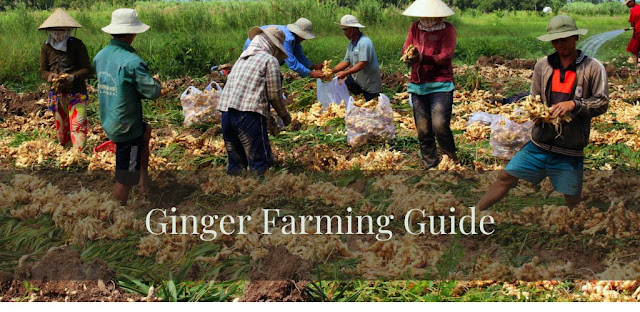
Ginger (Zingiber officinale Rosc.) is an annual herbaceous plant that is usually grown as an annual for its rhizomes. It is a valuable commercial plant and is widely used in food, beverage, confectionery and medicine. Ginger is marketed in various forms such as raw ginger, dried ginger, ginger powder, ginger oil, ginger oleoresin, ginger beer, ginger candy, ginger beer, brined ginger, ginger wine, ginger pumpkin, ginger flakes, etc. Ginger farming guide will help increase farmers' understanding of how to keep their farms free from viruses and disease. Emphasis should be on continuous efforts to reduce disease incidence to a minimum and protect plants for as long as possible from infection. Likewise, information on disease-affected areas and infection rates including management strategies will help farmers make informed decisions regarding agricultural investment and sustainability of ginger cultivation in their area. Planting Ginger The rhizome of the seed must be carefully preser...

Kiwi Planting Guide - How To Grow Kiwifruit

Gambar
Kiwi grow on vines up to 15 feet long and may not be suitable for anyone with a small area for gardening. They are rather hardy in winter, and some can grow in areas up to zone 3. Varieties known as "hard" kiwi are better for cooler areas, though Hayward's kiwi is the most common for home growers (zone 5). They do need winter to produce fruit, so you can't grow kiwi in a place warmer than zone 8. Different varieties have different temperature requirements, so you should try to buy plants that suit your climate. Kiwifruit Planting Guide The fruit is high in vitamins C and A, potassium, copper and filled with tiny (but edible) black seeds that make an interesting pattern when the kiwi is sliced. Start growing kiwi from Seed Since kiwi plants require a fairly precise cooling period to germinate, most people simply use sowing, or grape stem cuttings. At one time, kiwis were only available in male or female which meant you had to be careful to buy the right "gender...

Commercial Papaya Farming Management Guide

Gambar
Papaya is one of the most popular tropical fruits included in the cactus plant group. Although it can tolerate dry and hot environments, it needs an adequate supply of water during its lifetime. It prefers deep loam soil that is rich in plant nutrients, well drained, good airflow and plenty of sun. Papaya Farming Guide Papaya grows can reach 3 to 10 meters. Usually unbranched during initial growth, When it reaches maturity usually after one year of production, new shoots appear on the rootstock which develop into branches when the plant reaches its maximum height or when the main scion is pruned. Papaya Varieties Generally there are two groups of papaya varieties, small fruits called solo weighing under 500 grams and large fruits weighing 500 grams to 10 kilograms. Both are used as fresh table fruit. Several large varieties are used for processing and canning. Tree fruit that weighs less than 500 grams is called solo papaya because one fruit can be easily consumed by one person. There ...

Step To Successful Lavender Farming - Guide For Profit

Gambar
Lavender is an evergreen perennial plant. Because lavender is a drought tolerant plant that thrives in drying conditions. Planting lavender requires dry roots and shoots, free-draining soil, and a reasonable level of light. Sandy soil with low fertility is ideal with a pH range of 6.0 to 7.5. The plants are hardy enough to tolerate moderate frosts and light frosts and will flower well in relatively cool climates. High humidity is not tolerated by lavender. Because there is a wide variety in lavender varieties, their response to different climates varies and requires testing to ensure you choose the best species for your climate. Harvesting and Pruning Lavender Depending on the variety, the oil harvest is carried out in mid-summer. It is important for oil processing that the flowers are dry during harvest. Harvesting for fresh or dried flowers occurs about 10 days later. It can be completed by hand or machine. Pruning is carried out in early autumn. Pests and Diseases There are a few p...

It's Easy To Successfully Grow Succulents

Gambar
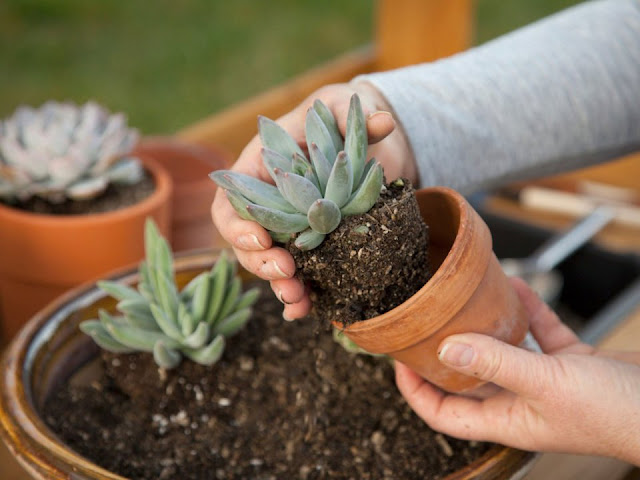
Succulent is the common name for plants that store water in their leaves. This is not a scientific term, but rather a descriptive term. And this trait —the thick, juicy leaves, and the ability to store water in the flesh—is what unites a large group of plants from around the world. Cacti, agave, and aloes are all succulents, along with plants most people would identify as succulents, such as stonecrops (Sedums) and "hen and chicks" (Sempervivum) and jade plants (Crassula ovata). Succulents are popular plants in both containers and in the landscape — and for good reason. It is low maintenance, drought tolerant, and very easy to care for. Succulents are also popular because they are so beautiful in their own surreal way. Its robust architectural forms, beautiful colors, and eye-catching textures will bring out your artist soul--and their seemingly limitless variety will tempt you to become a collector. Very few people can quit after just one succulent! Grow Succulents Guide Gro...

How To Grow Moss Indoor Successfully And Care For Them

Gambar
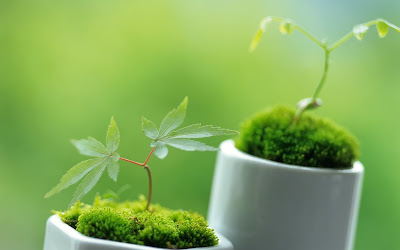
When we hear the word moss, we tend to think of a flat green plant that grows in a cool, humid place hidden deep in a forest or mountain range. In recent years, moss gardening has begun to attract attention. There are many ways to enjoy moss. One of them is a kokedama moss ball, where the moss is wrapped into a ball around the plant's roots. Another is kokebonsai, where small plants and moss are grown together in pots. Stunning natural beauty and nostalgic forests can be replicated in a moss tray scene, and moss growing in a transparent container, or terrarium, has a life of its own. In this book, we will explain what moss is, how to grow it successfully, how to make various miniature moss gardens and how to care for them. Have you ever fallen in love with the charm of moss and wanted to try growing it yourself, or have you bought kokedama at a gardening store but weren't sure how to care for it, or have you tried growing moss before but it turned brown and dries up? . In our ...

Grow Wasabi From Seeds

Gambar
Wasabi is accustomed to shady river banks high in the Japanese mountains so has evolved to survive in very low light levels. It will need protecting from the summer sun with heavy shade. Under over-hanging branches, behind a tall bush or on the shaded side of a fence or wall are all good spots. Choose a shaded, well-ventilated spot, avoid window sills and sunny locations. If you have a pond, wasabi will be happy on the edge provided shade is available. Caring Wasabi Plant Wasabi loves its summers cloudy and cool so if the weather is dull you can take solace in the  fact the wasabi will be thriving. If your shade is not sufficient in summer you will notice the leaves yellowing, provide more shade by  growing a tall plant on the sunny side or fixing a piece of shade cloth above the wasabi. A well-established plant will send large heart shaped leaves 60 cm high and a meter wide, making a striking feature in a shady spot where other plants might struggle to gather enough light. Th...

Guideline For Repotting a Snake Plant - Transplant And How To Care

Gambar
Sansevieria are also known as " Snake Plant " or " Mother in Laws Tongue ". The bold leaves—with their striped, green-gray bands and yellow edges—spiral outward from a rosette at the base. Tolerating a wide range of environmental conditions, the Snake Plant Laurentii is perfect for spaces where natural sunlight may be limited. The snake plant comes from African-Asian origins and has 4 primary variants: Golden Hahnil and Hahnil,( the Bird's Nest varieties), Laurentii Compacta, and Laurentii. Snake plants are marked by their erect, slender, and stiff leaves. The leaves are channelled down the face and rounded on the back. They are usually a very dark green and banded with lighter green, yellow, or black. Snake plant are super easy to care for and thrive with neglect. Perfect for beginners and those who have less time on their hands. Light & water for Snake Plants - Transplant Bright, indirect light is preferred but Snake Plants will also tolerate low light co...