Postingan

Menampilkan postingan dengan label farming

Guide : Maggot BSF Farming - Black Soldier Fly Larva Cultivation

Gambar
The use of black soldier fly or maggot black soldier fly (BSF) as a degrading agent for organic waste has begun to be developed to reduce the volume of organic waste. BSF maggot used to degrade organic waste also has a valuable protein source for animal feed to the alternative to conventional feed. BSF maggot that can be used as fish feed on an intensive aquaculture scale. BSF maggot is an alternative feed used as fish because it is rich in water, protein, fat, ash, and fiber content.   In recent years, the cultivation of Maggot Black Soldier Fly (BSF) has become an alternative for processing organic waste because it has no adverse side effects on the environment. Guide of larva maggot cultivation - Black Soldier Fly (BSF) BSF larvae can be an alternative to conventional feed. Feed formulations have been widely used, but the price is relatively high. BSF larvae can be fed with various foods such as kitchen waste, fruits, vegetables, liver, fish waste, urban waste, human waste, an...

Guide to Starting Tilapia Cultivation - How to Grow Tilapia

Gambar
Currently, tilapia is one of the most popular fish to be cultivated. Since ancient times, people have been growing tilapia on their farms. This farm is known as a commercially successful business. Like seaweed cultivation, this cultivation can change your destiny. There are several ways to cultivate this fish. Here we try to focus on the most profitable processes that will increase its productivity. Tilapia is a warm water, hardy fish. That's why it's easy to grow. Moreover, you can easily cultivate it in all kinds of fish farming systems. That makes it one of the best small-scale aquacultures from large commercial production to small backyard ponds. To start from scratch, it is necessary to have proper knowledge of tilapia fish farming , pond or tank design, water and feed management. In addition, it is necessary to have an adequate pond or tank design. This allows efficient water management. Your profit from this farm will depend on how well you can water the quality of the w...

Cabbage Farming Guide - Cabbage Cultivation

Gambar
Cabbage (Brassica oleracea var capitata) belongs to the family Cruciferae. Other member of this family include cauliflower, broccoli and pak-choi. Cabbage can be cooked or eaten raw as in salads and coleslaw. It is important for its food value since it is a good source of Vitamins B and C, dietary fibre and minerals. Cabbage can be grown all year round but does better when the nights are very cool (October to March). Just a few plants planted fortnightly will keep the home continuously supplied with this vegetable. Cabbage Cultivation Cabbage Varieties Varieties are classified according to the length of time taken to produce mature heads. Generally there are two types namely early maturing and late maturing varieties. EARLY MATURING VARIETIES Early maturing varieties produce smaller heads and mature between 60–65 days. Examples of early maturing varieties are: Tropicana, Fortuna, Blue Vantage , Supreme Vantage and Bravo LATE MATURING VARIETIES Late maturing varieties produce large head...

Onion Culvitation - Growing Guide

Gambar
Garlic and perennial onions are alliums with similar growing and storage requirements. Under the right conditions it is a very productive crop, with a harvest 3-8 times greater than the amount planted. With proper care, this allium is self-sustaining, so it is perfect if you are interested in local food, permaculture, and perennials. Onion Varieties Potato Onions, Multiplier Onions, Shallots : (Allium cepa var. aggregatum) These perennial onions are planted whole in the fall or late winter and subdivide the following spring. Perennial Leeks : (Allium ampeloprasum) Easily propagated by divisions. Egyptian Walking Onions : (Allium cepa var. proliferum) These topsetting onions are grown primarily for their hardy greens. Elephant Garlic : (Allium ampeloprasum) closely related to leeks, the very large cloves are mild enough for eating raw. Hard-necked garlics : (Allium sativum var. ophioscorodon) produce scapes (hard-stemmed flower stalks that bear aerial bulbils) and have a variety of comp...

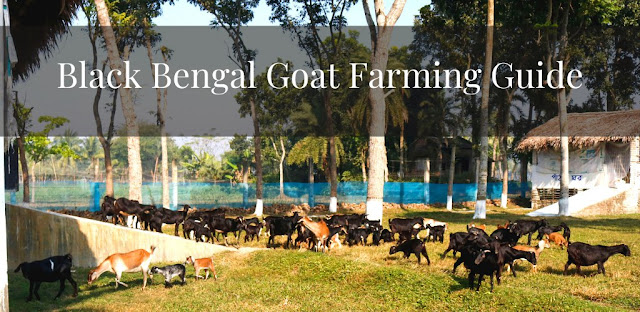
How to Start Black Bengal Goat Farming

Gambar
Black Bengal is one of the important breed due to its high prolificacy, early maturity, low kidding interval as well as for their delicious meat and high quality black skin. The breed is locally known as „Deshi‟ Goat. It is normally distinguished from other breeds by its certain prominent physical characteristics, viz., small size, deep body, short legs, thin and shiny hair coat. Internationally the breed is famous as „Bengal Goat‟. The breed possesses different pure and mixed colours, amongst which black and black combined with mixed colours are most frequent with certain amount of regional variation. As a consequence the breed is often known as "Black Bengal". Black Bengal Goat - Breed Characteristics Physical characteristics: It is small-legged goat. Shoulder and hips are of equal height. Chest is wide with deep body. Body looks triangular from side in females, with heavier posterior region. This character is less prominent in males. Face is comparatively short in males wi...

Organic Vegetable Gardening & Farming - Techniques Guide

Gambar
In agriculture, the word organic means “ food that is grown or raised without synthetic fertilizers or pesticides or hormones. ” According to the USDA National Organic Standards Agency, organic farming : is an ecological production management system that promotes and enhances biodiversity, biological cycles and soil biological activities; based on minimal use of off-farm inputs and on management practices that restore, maintain or enhance ecological harmony; has the primary objective of optimizing the health and productivity of interdependent communities of soil, plant, animal and human life.   Organic Vegetable Gardening As a component of organic farming, organic vegetable gardening promotes and enhances natural diversity and biological cycles in agriculture. Rather than relying on synthetic fertilizers and pesticides, organic gardening is based on making the garden self-sufficient and sustainable. The National Organic Program (NOP), http://www.ams.usda.gov/AMSv1.0/NOP, defines or...

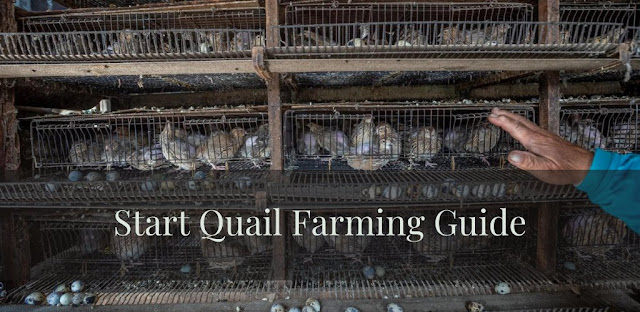
Start Quail Farming for Productive Cultivation

Gambar
Quail is probably the smallest bird species used for egg and table meat production. Due to its productive egg and meat production, quail farming is a very profitable business economically. Quail belong, along with chickens, pheasants and partridges to the Family Phasianidae of the Order Galliformes of the Class Aves of the Animal Kingdom. Species or subspecies of the genus Coturnix are native to all continents except America. One of them, Coturnix coturnix or quail commonly called Icipingila in one of the regional languages ​​of Zambia (Bemba), is a migratory bird of Asia, Africa and Europe. Several interbreeding subspecies are recognized. More important are the European quail, Coturnix coturnix, and the Asian or Japanese quail, Coturnix japonica. They were first domesticated in Japan in 1595. Later, in other countries of the world including the United States, Canada, Kenya, Zimbabwe, India, and Zambia. How to Start Quail Farming Quail farming means, commercially raising quail (like ot...

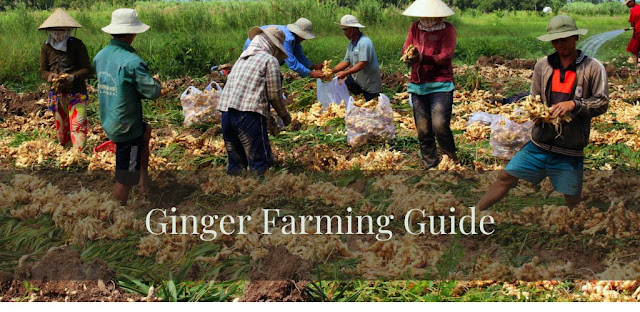
Ginger Cultivation Guide : How to Plant Method & Analysis of Production in Ginger Farming

Gambar
Ginger (Zingiber officinale Rosc.) is an annual herbaceous plant that is usually grown as an annual for its rhizomes. It is a valuable commercial plant and is widely used in food, beverage, confectionery and medicine. Ginger is marketed in various forms such as raw ginger, dried ginger, ginger powder, ginger oil, ginger oleoresin, ginger beer, ginger candy, ginger beer, brined ginger, ginger wine, ginger pumpkin, ginger flakes, etc. Ginger farming guide will help increase farmers' understanding of how to keep their farms free from viruses and disease. Emphasis should be on continuous efforts to reduce disease incidence to a minimum and protect plants for as long as possible from infection. Likewise, information on disease-affected areas and infection rates including management strategies will help farmers make informed decisions regarding agricultural investment and sustainability of ginger cultivation in their area. Planting Ginger The rhizome of the seed must be carefully preser...

Kiwi Planting Guide - How To Grow Kiwifruit

Gambar
Kiwi grow on vines up to 15 feet long and may not be suitable for anyone with a small area for gardening. They are rather hardy in winter, and some can grow in areas up to zone 3. Varieties known as "hard" kiwi are better for cooler areas, though Hayward's kiwi is the most common for home growers (zone 5). They do need winter to produce fruit, so you can't grow kiwi in a place warmer than zone 8. Different varieties have different temperature requirements, so you should try to buy plants that suit your climate. Kiwifruit Planting Guide The fruit is high in vitamins C and A, potassium, copper and filled with tiny (but edible) black seeds that make an interesting pattern when the kiwi is sliced. Start growing kiwi from Seed Since kiwi plants require a fairly precise cooling period to germinate, most people simply use sowing, or grape stem cuttings. At one time, kiwis were only available in male or female which meant you had to be careful to buy the right "gender...

Commercial Papaya Farming Management Guide

Gambar
Papaya is one of the most popular tropical fruits included in the cactus plant group. Although it can tolerate dry and hot environments, it needs an adequate supply of water during its lifetime. It prefers deep loam soil that is rich in plant nutrients, well drained, good airflow and plenty of sun. Papaya Farming Guide Papaya grows can reach 3 to 10 meters. Usually unbranched during initial growth, When it reaches maturity usually after one year of production, new shoots appear on the rootstock which develop into branches when the plant reaches its maximum height or when the main scion is pruned. Papaya Varieties Generally there are two groups of papaya varieties, small fruits called solo weighing under 500 grams and large fruits weighing 500 grams to 10 kilograms. Both are used as fresh table fruit. Several large varieties are used for processing and canning. Tree fruit that weighs less than 500 grams is called solo papaya because one fruit can be easily consumed by one person. There ...

Step To Successful Lavender Farming - Guide For Profit

Gambar
Lavender is an evergreen perennial plant. Because lavender is a drought tolerant plant that thrives in drying conditions. Planting lavender requires dry roots and shoots, free-draining soil, and a reasonable level of light. Sandy soil with low fertility is ideal with a pH range of 6.0 to 7.5. The plants are hardy enough to tolerate moderate frosts and light frosts and will flower well in relatively cool climates. High humidity is not tolerated by lavender. Because there is a wide variety in lavender varieties, their response to different climates varies and requires testing to ensure you choose the best species for your climate. Harvesting and Pruning Lavender Depending on the variety, the oil harvest is carried out in mid-summer. It is important for oil processing that the flowers are dry during harvest. Harvesting for fresh or dried flowers occurs about 10 days later. It can be completed by hand or machine. Pruning is carried out in early autumn. Pests and Diseases There are a few p...

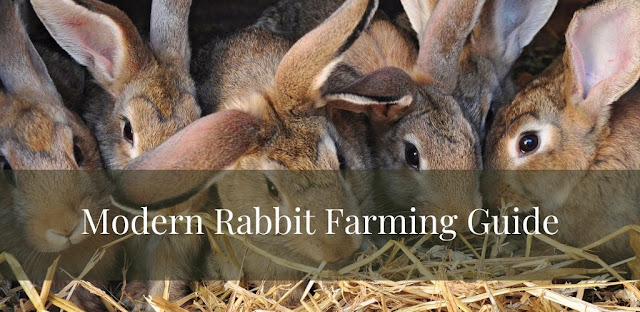
Modern Rabbit Farming Guide To Maximum Profitable

Gambar
The selection of the main stock is the first and most basic step towards the success or failure of a rabbit operation. Naturally, the appearance of the animal will play a major factor in the selection process. Other important requirements are health, strength, longevity, ability to reproduce, and desired breed and conformation. However, on the whole, the main criterion remains the record of the rabbits. It is very important to study records of family production, heredity, animal size, growth potential, etc. Therefore, buy your foundation stock from a reliable and well-established rabbit that keeps the records. Rabbit Farming Guide Breeding Management If it is 4 months old or older, check it regularly for reception (vulva turns purple or red). The following are guidelines for nurseries: Breeding is initially carried out at 5 months of age for small breeds and 6 months of age for medium breeds. Use mature money at the age of 6 months. Breed in the morning or evening. Take the doe to the...